don’t act like we’re friends
offline-only friendships in a digital age


the hermit
I've struggled to make myself legible within a lot of social contexts and in my friendships. The former was characterised by anxious mental paralysis masquerading as emotional intellectualisation. The latter was hiding in social seclusion for the bulk of my twenties — a weeaboo adjacent femcel.
Not having an active Facebook and Instagram account was the curse of non-existence. How can people know you if you don't have a shopping window to display your accolades? Photos of parties, job ascension, marriage and the eventual ovarian pipeline of baby-making.
primordial social media
Before Facebook, my preteen years were dedicated to enshrining my identity on Bebo, a British-based kidsbop social media network. MySpace had been winding down and Bebo was the premier social media profile to create in 2008. Much like its predecessor, the profile was fully customisable, you could upload galleries, a wall for any one of your friends to post and the lucrative “give love” button to gift as a daily ritual. The hearts were social currency. How relevant you were to people and where on the ladder of imagined popularity did you sit on?
reciprocity
What these older platforms had was an embedded sense of reciprocity. Posting on friend’s walls was an invitation for people to join the conversation and delivering a heart meant the act of clicking a button was deliberate. Groups were badges you could display. I found my favourite magical girl AMV from a video embed on a friend's profile. Today, boring posts from mutuals aren't as exciting as the slot machine of social media feeds. Engage in an algorithmic live birth of a random reel. Post an ephemeral story that will dissipate in twenty-four hours. Do not, under any circumstances, ask people about what they're up to.
I've felt silly asking people about their break-ins, family health issues and just mundane events that mutuals post on their posts or stories. It's considered a social faux pas to ask, everything is view-only.
and I take that personally
Likewise, if I have a tiny bit of happy news, my business featured in the local paper, my pieces of writing getting published in local zines or a position in this upstart media group, I don't feel compelled to share. We can all say seeking outside validation is trite but posting and expecting for basic acknowledgement is somehow deemed too much. Do I take the story voyeurism and being left on read personally? No. But on a consistent basis? Absolutely. Especially when writing acquaintances have been, by far, the most openly supportive. We don't owe anyone anything. Just like you don't owe your electricity bill payment, it simply gets cut off. The evil eye forms opinions and monitors your activities. Those view counts are not your friends. WTF do I do with friendship as vibes when someone is hospitalised? Thoughts and prayers?
offline-only friends
One of the gripes I've had lexically is referring to my friends as “people I met online”. There's a weird stigma towards former strangers you've never physically met but know intimately. The reality is because digital mediums are the only way we can be friends, there's an active current in communication. It's not always frequent but the wavelengths are there.
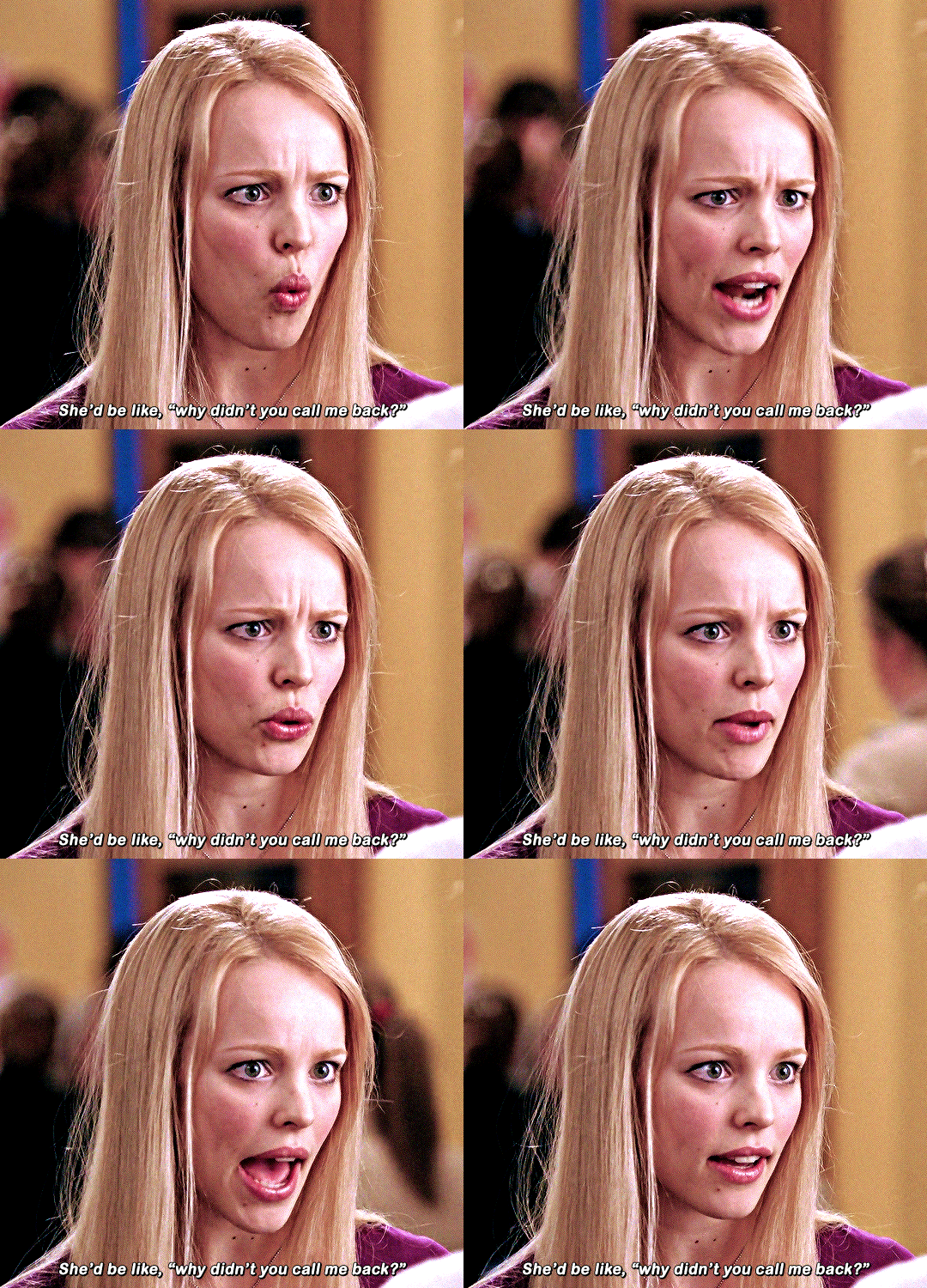
Conversely, the majority of friends I've made in my late-twenties, do not relate to me as an alive person. Modern day relationships consist of ignoring someone until they're physically in front of you. There's a lack of object permanence — you're dead to me unless we're actually hanging out. A lot of them have my number so this isn't to force feed Instagram down their throats. It's a devolution of community that we are trying to unlearn but unable to enact.
I've decided my friends act like my friends and offline-only friends are only human if they choose to be. Otherwise they’re cyber projections — avatars that represent behaviours inconsistent with actual friendship. Sure, meeting the girl that left me on read, at a party, was awkward (for her). But she didn't ignore me when we were rendered as humans with bodies, just within the online context. I don't want to be someone that acts less empathetic, less curious and less human just because it's normal. We have more potential to be consciously connected. It's now a choice.